News
Tick Awareness! Protect yourself and be aware.
- Published: June 18, 2026


pdf PDF from Nova Scotia Public Health(215 KB)
Here are some steps that people can take to protect themselves and their children, especially in grassy, wooded, or shrub-covered areas:
• Apply insect repellents containing DEET or Icaridin to exposed skin and clothes. Follow directions on the package carefully. Infants under the age of six months should not use these products. Please visit Personal Insect repellents -
Canada.ca for specific instructions.
• Wear light colored, long-sleeved shirts and pants, closed-toed shoes, and tuck shirts into pants and pant legs into socks.
• Keep lawns mowed short.
• Put playground equipment in sunny, dry places away from wooded areas, yard edges, and trees.
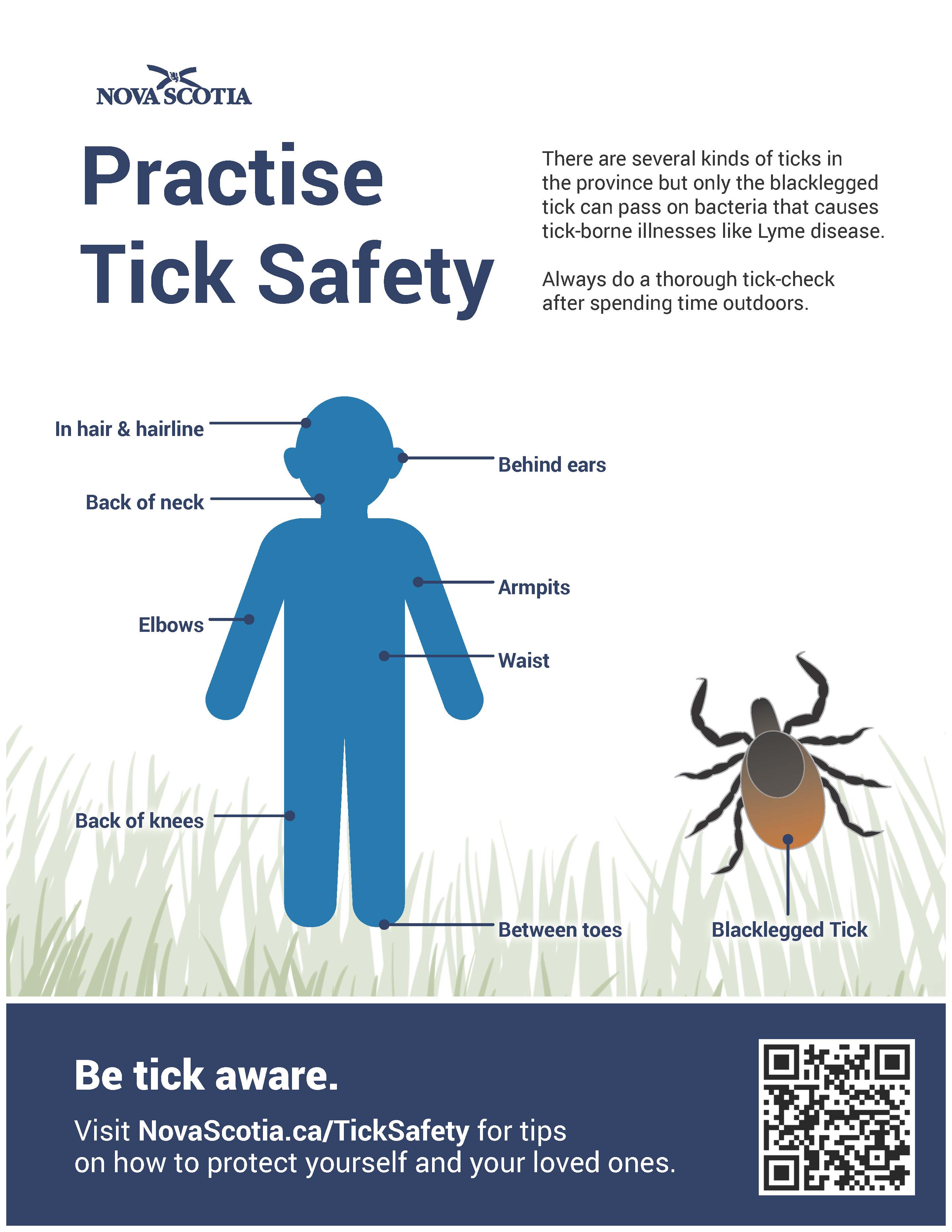
• Check your whole body/children’s bodies for ticks when possible (especially armpits, ears, knees, hair, groin) and take a bath or shower within two hours of coming indoors. This makes it easier to find ticks and washes away loose
ones.
• Clothing is available that is treated with Permethrin (a chemical repellent) and can protect against ticks and mosquitoes for those 16 years of age and older. This clothing is not approved for those under 16 years of age in Canada.
What do I do if I find a tick on me/my child?
If you find a tick on your body, remove it as soon as possible to lessen the risks of infection. Here’s how to remove them safely:
- Carefully grasp the tick with tweezers as close to the skin as possible.
- Gently and slowly pull the tick straight out. Don’t jerk, twist or squeeze it.
- Clean and disinfect the site with soap and water, rubbing alcohol or hydrogen peroxide.
- To dispose of a tick, place it in a sealed plastic bag and either drown it in rubbing alcohol or freeze it for several days. Don’t crush ticks with exposed fingers. Once dead, throw the bagged tick in the garbage.
- Do NOT burn, squeeze, or coax a tick’s mouthparts from your skin using other methods.